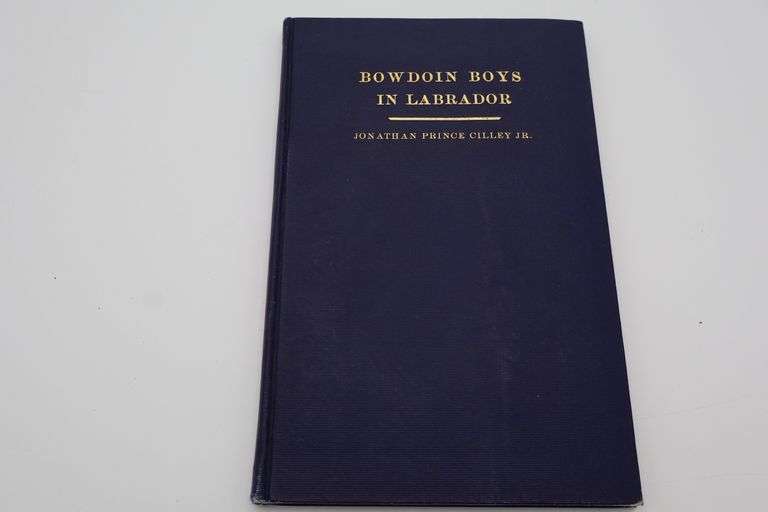
Bowdoin Boys in Labrador Jonathan Prince Gilley JR
What it is
-
Full title: Bowdoin Boys in Labrador: An Account of the Bowdoin College Scientific Expedition to Labrador led by Prof. Leslie A. Lee of the Biological Department by Jonathan Prince Jr. Cilley.
-
Published in Rockland, Maine by Rockland Publishing Company, roughly in the early 1890s. The expedition took place in 1891.
-
It is a travel/scientific‐expedition narrative: observations of nature, geography, people (Indigenous, settlers), flora & fauna, and ethnographic detail.
Contents / Key Features
Here are some of the main points from what the book covers:
-
Departure from Maine (Rockland) aboard the vessel Julia A. Decker, crossing toward Newfoundland / Labrador.
-
Nautical challenges: descriptions of storms, calm seas, wind shifts, rough seas, etc.
-
Arrival at Red Bay on the Labrador coast — descriptions of cliffs, icebergs, the harbor, local settlements, how people live seasonally.
-
Ethnographic detail: observations of Indigenous peoples (referred often to as “Indians,” “Eskimo,” “half‑breed,” etc., in the language of the time) — dress, hair styles, the women’s hairstyles, their camps, trading activity, personal cleanliness, etc.
-
Natural history: bird life (puffins, auks, guillemots, etc.), fishing, geography (rivers, canyons — especially something called “Bowdoin Canon”), observation of flora & fauna, mapping. The expedition also delves into prehistoric sites (Eskimo settlements) along Labrador’s coast, photographing and documenting them.
-
Harsh conditions: mosquitoes / black flies; difficulties of navigating the terrain, food & supply challenges; sometimes dangerous navigation.
Significance / Context
-
Provides a primary account from the 1890s of scientific expeditions to Labrador — useful for naturalists, geographers, ethnographers, climate and wildlife change studies.
-
The way Indigenous peoples are portrayed gives insight into the attitudes of the period (including colonial/settler perspectives).
-
The “Bowdoin Canon” is notable — steep‑walled canyon river, a key geographic discovery in their expedition.
