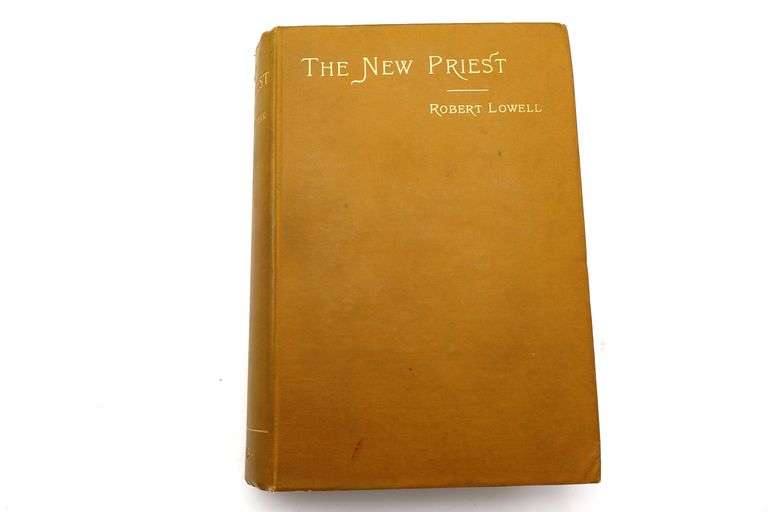
1889, The New Priest in Conception Bay by Robert Lowell
📘 Bibliographic Information
-
Title: The New Priest in Conception Bay (sometimes shown as The Story of the New Priest in Conception Bay).
-
Author: Robert Traill Spence Lowell (1816‑1891).
-
First edition: Boston: E.P. Dutton (1858) according to some sources.
-
Revised edition: Boston: Roberts Brothers, 1889.
-
This novel is set in “Conception Bay” (a Newfoundland locale) and is partly based on Lowell’s experience as a missionary at Bay Roberts, Newfoundland in the 1840s.
🧭 Content & Context
-
Lowell served as a missionary priest at Bay Roberts, Newfoundland (in the 1840s) and his time there forms the basis for the fictional setting “Peterport” in the novel
-
The novel depicts outport life in mid‑19th‑century Newfoundland: fishing communities, dialect, conflict of religious and social norms.
-
It is noted for being “the first attempt to capture the people of Newfoundland and their way of life on a literary canvas.”
-
Critical commentary notes the novel has strong sectarian biases (Protestant vs. Roman Catholic) and uses stylised dialect representation.
✅ Significance
-
For Newfoundland & Labrador literature, this work holds historical importance as an early fictional treatment of Newfoundland outport life and dialect. Its location and characters reflect a missionary’s perspective of a remote community and provides a lens into 19th‑century Newfoundland society (fishing economy, settlement patterns, religious conflict).
-
For literary history, it shows how an American missionary used his Newfoundland experience as the basis of a novel and thus intersects with themes of colonialism, religion, and place.
⚠️ Considerations / Caveats
-
Although the setting is Newfoundland, the author is not Newfoundland‐born but an American missionary, so the perspective is external.
-
The work contains religious bias and character stereotypes — for example, Catholic characters portrayed negatively — which modern readers should note. The dialect rendering is historic but may be considered problematic by contemporary standards.
-
If you’re using this for serious historical research, it may be best treated as fictionalised narrative with some basis in experience, rather than as pure factual social history.
