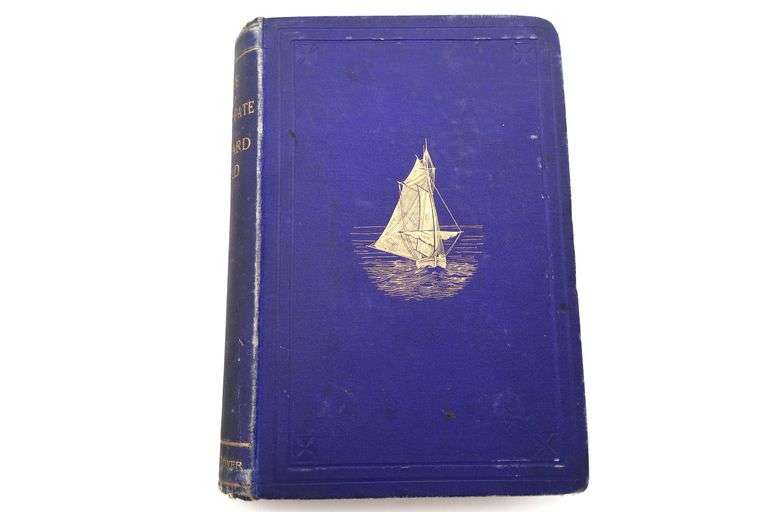
1877, Memorir of the Life and Episcopate of Edward Feild, D.D. Bishop of Newfoundland 1844-1876 by T
Edward Feild (1801-1876) served as Bishop of Newfoundland (and Bermuda) from 1844 until his death in 1876. His episcopate was notable for establishing and consolidating Church of England infrastructure, mission work, and education in what was then a very remote, rugged diocese.
Bibliographic details
-
Title: Memoir of the Life and Episcopate of Edward Feild, D.D., Bishop of Newfoundland, 1844-1876.
-
Author: H. W. Tucker (Henry William Tucker, M.A.)
-
Published: London: W. Wells Gardner (first edition in 1877)
-
Format: The digitised edition lists “xii, 312 pages; map; 19 cm”.
Scope & Content
The book is a biographical and episcopal history covering Bishop Feild’s life from his birth (1801) through his episcopate in Newfoundland from 1844 to 1876. Contents include:
-
Early life and ministry before Newfoundland.
-
His arrival in Newfoundland and the state of the diocese at that time: very sparsely staffed, remote settlements, challenging conditions of travel and climate.
-
His efforts to recruit clergy, establish missions, expand educational opportunities, and organize the diocese.
-
His travels by sea (including the use of the church ship Hawk) to visit remote settlements along the Newfoundland coast and Labrador.
-
His reflections on the hardships of the field and the growth achieved under his leadership.
-
Appendices and map of the diocese.
Significance
-
The book is a key source for the history of the Anglican Church in Newfoundland and Labrador in the mid- to late-19th century.
-
It gives first-hand or near-first-hand insight into the institutional development of the Church, missionary challenges, clergy recruitment, remote mission work along a rugged coast.
-
It helps understand the interplay of religion, settlement, geography, and institutional expansion in a colonial context.
-
For historians of Newfoundland & Labrador, church history, or colonial Anglicanism, it is a crucial text for its era.
Things to note / Caveats
-
Written from a Church of England / Anglican viewpoint; its portrayal of Indigenous peoples, non-Anglican actors, or other denominational missions may be limited or biased.
-
Bishop Feild’s narrative of his own time and the author’s biography may emphasise success and sacrifice; readers should cross-check with local settlement or secular sources for a fuller context.
-
Because of the remote geography and the era (mid-19th century), some details (e.g., travel, mission settlements) may reflect the author’s perspective rather than systematic data.
-
While first published in 1877, later editions (or reprints) may vary; ensure you cite the version you have.
How you might use it
-
As primary source material for the life of Bishop Feild and the Anglican Church in Newfoundland and Labrador circa 1844-1876.
-
To extract descriptions of mission life: travel by schooner, remote settlements, the challenges of clergy work in a harsh environment.
-
To study institutional church growth: missions, clergy numbers, educational efforts, diocesan organization.
-
As contextual background for broader social history in Newfoundland: settlement, religion, coastal community life, church & society relationships.
-
As part of church-architecture or settlement-history research: how missions were established, how clergy lived, how church infrastructure developed.
