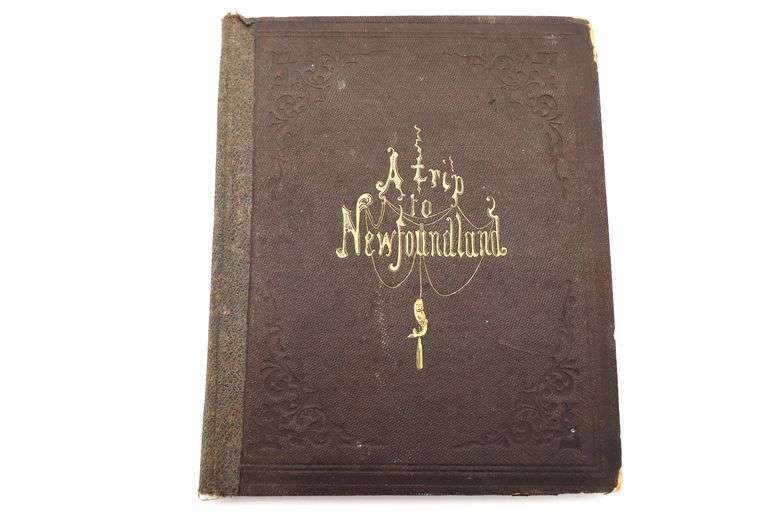
1855, A Trip to Newfoundland; It's Scenery and Fisheries by john Mullaly
Bibliographic details
-
Title: A Trip to Newfoundland: Its Scenery and Fisheries; with an Account of the Laying of the Submarine Telegraph Cable.
-
Author: John Mullaly.
-
Publication: New York: T.W. Strong, 1855.
-
Format: 108 pages, illustrated.
-
Listed in bibliographies of Newfoundland works under “MULLALY” with date 1855.
What the book is about
-
It is a travelogue of Mullaly’s journey to Newfoundland, describing the island’s scenery (coastlines, settlements, natural features) and its fisheries (which were central to the economy).
-
It also includes an account of the laying of a submarine telegraph cable (which was a major technological enterprise of the day) connecting Newfoundland (or at least discussing the cable in that context).
-
The book provides period views of Newfoundland in the mid-19th century: geographical features, settlement patterns, fishing operations, and infrastructure/communication developments.
Why it’s significant
-
The book provides a contemporaneous account of Newfoundland in 1855, which makes it valuable for historians of Newfoundland and Labrador, particularly of its fisheries, coastal settlement, and early communication infrastructure.
-
It reflects both the natural and socio-economic aspects of Newfoundland at a time when the fishery was dominant, and when technology (submarine cables) was beginning to link the island more closely to broader networks.
-
As an illustrated book, it may include engravings or views which provide visual testimony of the era’s landscape and enterprises.
-
In bibliographies of Newfoundland works (e.g., the Dictionary of Newfoundland English Bibliography) it is cited as one of the early travel-descriptive works.
Key themes & take-aways
-
Scenery & nature: The title emphasises “scenery”, so expect descriptions of Newfoundland’s rugged coast, bays, islands, physical geography.
-
Fisheries: The economy of Newfoundland was heavily fish-based; Mullaly likely reports on fishing methods, ports, fish trade, condition of the fishery at that time.
-
Communication & technology: The “submarine telegraph cable” element offers insight into mid‐19th-century infrastructure linking Newfoundland, which may speak to colonial/imperial communication networks, the Atlantic world, and technological ambition.
-
Settlement & society: Given the nature of travelogues, some descriptive commentary of communities, their condition, and perhaps social observations will be present (though likely from a 19th-century outsider’s perspective).
Use in research / what to watch for
-
Primary source value: Because the book dates from 1855, it is a primary or near-primary source for mid-19th-century Newfoundland; useful for historians of fisheries, settlement, infrastructure.
-
Perspective & bias: As with many works of the era, the author’s viewpoint, language, and assumptions may reflect colonial/outsider perspectives. It may romanticize scenery or under-represent Indigenous or marginalized groups. Interpret accordingly.
-
Visual content: The illustrations may give imagery of place and industry which might not otherwise survive; worth examining for research or exhibition.
-
Edition/version: The original is from 1855; modern reprints/facsimiles exist. Be sure to check whether you have the original pagination, illustrations, etc.
-
Citation details: If quoting or referencing, note the original 1855 edition and page numbers. There may be multiple reprints.
-
Contextual cross-checking: For factual claims (about fisheries, technology, settlement) cross-check with other sources of the era for accuracy or alternative views.
