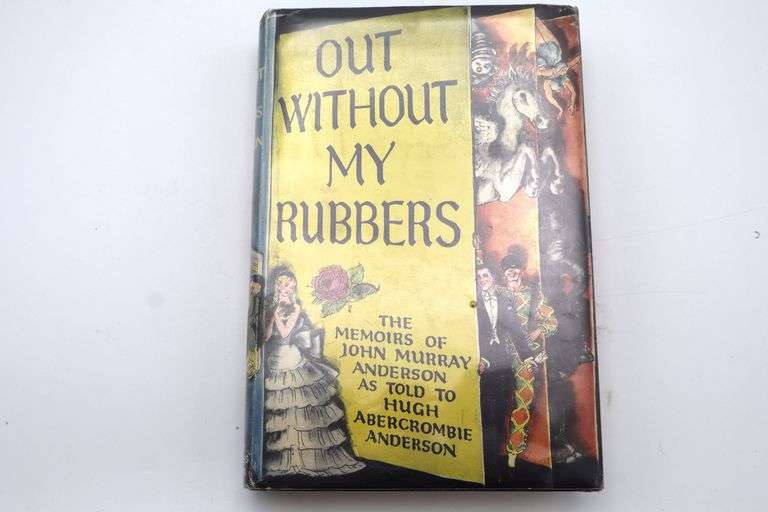
1954, Out Without My Rubbers, John Murray Anderson
Out Without My Rubbers: The Memoirs of John Murray Anderson is the posthumously published autobiography of Canadian-born theatre impresario John Murray Anderson, released in 1954 by Library Publishers. The title reflects Anderson’s early years in Newfoundland, where “rubbers” referred to waterproof overshoes—symbolizing his departure from the sheltered life of his youth.
🎭 About the Author
Born in St. John’s, Newfoundland, in 1886, John Murray Anderson became a pioneering figure in American theatre. He worked across Broadway, Hollywood, and London, directing and producing major revues and musicals such as Greenwich Village Follies, Jumbo, and New Faces of 1952. Known as “Uncle Broadway,” Anderson was celebrated for elevating the revue format with sophistication and artistry Wikipedia.
📖 Book Overview
Dictated to his brother, Hugh Abercrombie Anderson, the memoir offers an intimate look at John Murray Anderson’s life and career. It covers his early education in Newfoundland, his European studies, and his rise in the entertainment industry. The book was completed shortly before Anderson’s death in January 1954, making it a poignant final testament to his legacy.
🖼️ Visuals
The first edition features a distinctive cover designed by Herman Rosse, reflecting the theatrical flair of Anderson’s career. The book includes photographs from Anderson’s productions and personal life, providing readers with a visual connection to his experiences.
📚 Availability
The memoir is available in various formats:
-
Print Editions: Original first editions and later reprints can be found through rare book dealers and online marketplaces.
-
Digital Formats: The book is available as an eBook on platforms like Apple Books and Kobo, offering accessible options for modern readers.
🧭 Significance
Out Without My Rubbers provides valuable insights into the world of early 20th-century theatre and the life of a man who significantly influenced American entertainment. It serves as both a personal memoir and a historical document, shedding light on the evolution of theatrical productions and the individuals behind them.
