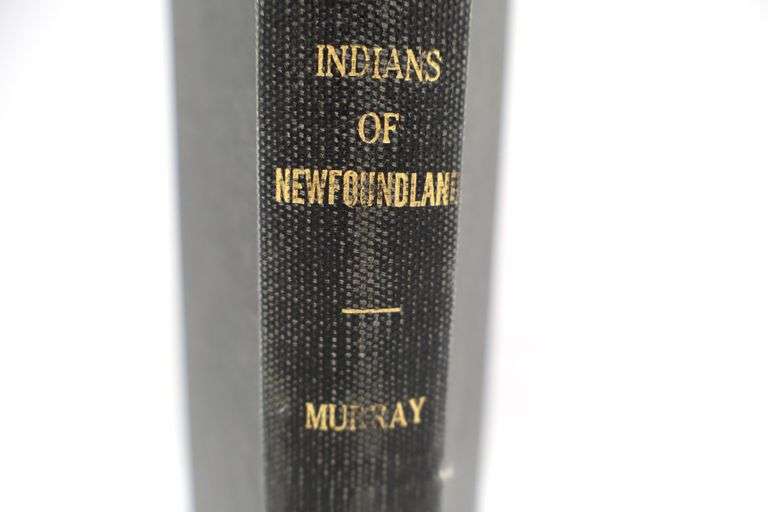
The Red Indians of Newfoundland, Charles Augustus Murray, ESQ.
📖 Bibliographic / descriptive information
-
The full title of the book appears as The Red Indians of Newfoundland.
-
Author: Sir Charles Augustus Murray.
-
According to the Google Books entry, it is available (at least in part) via a scan.
-
The subject matter concerns the indigenous people of Newfoundland (commonly referred to historically as the “Red Indians”, i.e., the Beothuk).
🎯 Context & significance
-
The Beothuk people lived in Newfoundland and are widely described in scholarship as having faced dramatic decline and extinction in the early 19th century.
-
Murray’s book is among the older works documenting the Beothuk (“Red Indians of Newfoundland”) from a 19th-century perspective.
-
It provides historical, ethnographic, and perhaps anecdotal accounts of these Indigenous inhabitants and their interactions with European settlers.
-
Because of its date and perspective, it reflects the colonial-era framing of Indigenous peoples (e.g., language like “Red Indians”, paternalistic tone) and so must be used with critical awareness in modern scholarship.
🔍 Use for research / how to approach
-
If you are citing or using this work, check which edition you have (publication year, publisher, page numbers) because older works often have multiple printings or variant titles.
-
Because of the age and context, be alert to biases, inaccuracies or outdated terminology (for example, descriptions of Indigenous cultures through Euro-settler lenses).
-
Cross-reference the information in Murray’s book with more recent works on the Beothuk (for instance, by James Patrick Howley, “The Beothucks or Red Indians” 1915) to situate it in modern understandings.
-
Use it as a primary historical source to understand how the Beothuk were represented in the 19th century, but not as a definitive ethnographic account according to today’s standards.
